
If you’re craving that chewy crust, tangy flavor, and soft interior only real sourdough bagels can offer, this is your trail. In this post, I’ll walk you through how to make sourdough bagels from scratch that rise beautifully, bake perfectly, and freeze like a dream. You’ll learn the secrets behind proofing, baking times, and troubleshooting that frustrating chewiness. Let’s dig into a recipe that’s been tested, loved, and polished in my kitchen until it felt just right.
Table of Contents
Table of Contents
Easy Sourdough Bagels Recipe
- Total Time: 50 minutes (plus overnight proof)
- Yield: 8 bagels 1x
- Diet: Vegetarian
Description
These sourdough bagels are chewy, golden, and naturally leavened with wild yeast. Perfect for breakfast or freezer-friendly meal prep.
Ingredients
1 cup active sourdough starter (100% hydration)
3 ½ cups bread flour
1 tablespoon honey
1 teaspoon salt
1 cup warm water
Optional: 1 tablespoon barley malt syrup for boiling
Toppings: sesame seeds, poppy seeds, everything seasoning
Instructions
1. Mix starter, water, and honey in a bowl. Stir until dissolved.
2. Add flour and salt. Mix into a shaggy dough and knead for 8–10 minutes until smooth.
3. Cover and let rise at room temperature for 4–5 hours until puffed.
4. Divide into 8 pieces, shape into balls, then poke holes to form bagels.
5. Place on parchment-lined tray, cover, and cold proof overnight (12–18 hrs).
6. Bring water to a boil, add malt syrup or honey. Boil bagels 30 sec per side.
7. Transfer to baking sheet, add toppings, and bake at 425°F for 18–20 minutes.
8. Cool on wire rack before slicing.
Notes
Make sure your starter is bubbly and active before mixing.
For extra chew, boil the bagels slightly longer—up to 45 seconds per side.
Slice and freeze for a quick breakfast option.
- Prep Time: 30 minutes
- Cook Time: 20 minutes
- Category: Breakfast, Bread
- Method: Baked, Boiled
- Cuisine: American
Nutrition
- Serving Size: 1 bagel
- Calories: 240
- Sugar: 2g
- Sodium: 320mg
- Fat: 1g
- Saturated Fat: 0g
- Unsaturated Fat: 0.5g
- Trans Fat: 0g
- Carbohydrates: 48g
- Fiber: 2g
- Protein: 8g
- Cholesterol: 0mg
Keywords: sourdough bagels, homemade bagels, fermented bread
A Tangy Twist on a Breakfast Classic: My Sourdough Bagel Story
Making Memories with Every Rise
Years ago, I tried making bagels from scratch on a snowy Indiana weekend. My kids were building snow forts, the fireplace was crackling, and I figured it was the perfect time to try something bold in the kitchen. I’d already fallen deep into sourdough baking by then, and I was craving that dense, chewy texture you only get from a real bagel. Boiled, crusty, and slightly sour.
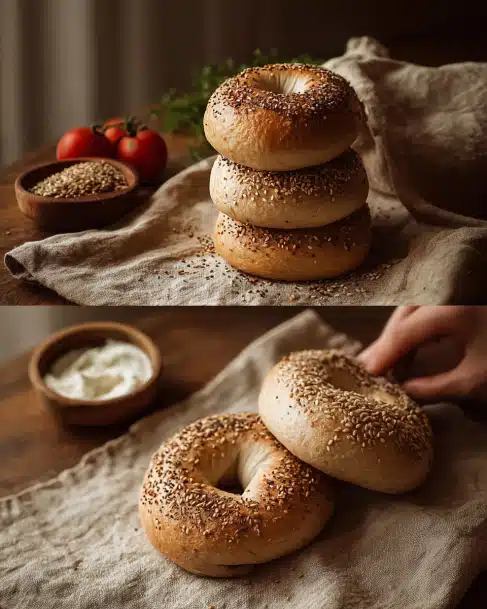
It didn’t go well at first. They turned out too flat, too soft, or too dense. But I kept learning, batch after batch. Eventually, those bagels were not just passable. They were exactly what I’d hoped for. Boiled to glossy golden perfection and chewy enough to hold up to a thick smear of cream cheese or a fried egg. Now, they’re part of our weekend rhythm.
That same dough also inspired my Cheesy Chive Sourdough Bagels, which are a flavor-packed twist if you want something savory. But this base recipe is where it all started, and it’s the one I always return to when I want a simple, honest bagel done right.
Why Sourdough Bagels Are Worth the Effort
Using wild starter instead of commercial yeast gives bagels a flavor that’s rich and layered. It takes more time, but the result is worth every step. Plus, sourdough digests more easily for many people thanks to the fermentation process. If you’ve already mastered a no discard sourdough starter, then bagels are your next delicious challenge.
These bagels also freeze beautifully, making them perfect for batch baking and quick morning meals. I love layering them into breakfast sandwiches or enjoying them with just a touch of butter and sea salt.
If you’ve been baking breads like this sourdough loaf, it’s time to shape that dough into something new and satisfying.
Mastering the Proof: Timing Your Dough for the Best Rise
Understanding the Sourdough Bagel Proof
The proofing stage makes or breaks your sourdough bagels. Underproofed dough will be tight and tough. Overproofed dough may deflate when boiled. But hit the sweet spot, and you’ll get that plump, glossy bagel with the perfect chewy texture.
After kneading and shaping, your bagels need time to ferment. Typically, I proof mine in two stages. First, a bulk rise at room temperature for four to five hours, depending on how active your starter is. Then, after shaping, the dough rests in the fridge overnight or up to 18 hours. This long cold proof develops the flavor and makes the dough easier to handle during boiling.
If you’re used to working with discard in your baking, you might notice that a stiff bagel dough behaves differently than something soft like sourdough buns. Bagels require strength. You want that gluten to develop fully for the dough to hold its shape when boiled.
For the best results, let the shaped bagels proof in the refrigerator on a parchment-lined tray. Cover them well, so they don’t dry out. In the morning, give them a quick poke. If they spring back slowly, they’re ready to boil.
Common Proofing Issues and Fixes
If your bagels are spreading too much, the dough may be overhydrated or underproofed. Try reducing the water slightly next time and let the gluten build before shaping. If they flatten after boiling, the gluten wasn’t strong enough or the dough was too warm during shaping.
I like to compare bagel proofing to my experience with flaky sourdough biscuits. Both need cold dough, strong structure, and patience. But when done right, your sourdough bagels will puff beautifully in the oven with that classic, chewy bite.
Boiling and Baking: Unlocking That Signature Bagel Texture
The Importance of Boiling Before Baking
Boiling might seem like an extra step, but it’s what sets bagels apart from rolls or buns. It locks in the shape and creates that dense, chewy crust everyone loves. Without it, you’ll end up with something closer to bread than a true bagel.
Use a wide pot filled with water and bring it to a gentle boil. Just before adding your bagels, stir in a tablespoon of honey or barley malt syrup. This small touch helps build a glossy, golden finish. I boil my bagels for 30 seconds per side. If you like a thicker crust, go for 45 seconds. Any longer, and the texture might get too dense.
Place the bagels into the water gently, about three at a time. Don’t overcrowd the pot. After boiling, transfer them to a parchment-lined baking sheet. If you want to add toppings, now is the time. Sesame seeds, everything seasoning, or even a sprinkle of flaky salt all work beautifully.
This step reminds me of how the crust forms on blooming sourdough bread. Both need moisture and heat at just the right moment.
Baking for That Golden Finish
Once boiled, bake your bagels in a hot oven usually around 425°F for 18 to 20 minutes. I like to preheat a baking stone or steel, which helps give them a good rise from underneath.
Halfway through, rotate the tray so everything bakes evenly. They’re done when they’re deeply golden and feel firm on the outside. Let them cool on a wire rack before slicing. This wait can be tough, but it keeps the texture perfect.
You’ll find this bake time sweet spot also applies to recipes like sourdough French bread, where oven spring and crust timing matter just as much.
Storing, Serving, and Solving Bagel Problems
Best Ways to Store and Freeze Sourdough Bagels
Fresh sourdough bagels are best enjoyed the day they’re baked, but they also store well if handled right. Once fully cooled, store them in an airtight container at room temperature for up to 2 days. For anything longer, freezing is the way to go.
To freeze, slice the bagels if you plan to toast them straight from frozen. Wrap each one tightly in plastic or parchment, then seal them in a freezer-safe bag. They’ll stay fresh for up to 3 months. Reheat them in a toaster or warm oven. The crust revives beautifully, and the inside stays soft and chewy.
This is the same approach I take with my sourdough garlic knots, which also freeze well and reheat like a dream.
Delicious Ways to Serve Your Bagels
These bagels are endlessly versatile. Spread with cream cheese, top with smoked salmon, or build a breakfast sandwich with eggs and avocado. I also love making pizza bagels using leftover marinara and cheese, then toasting them until bubbly.
For something sweet, try honey butter or a fruity cream cheese. You can even serve them with soup, much like you would with no discard sourdough starter rolls.
If you’re baking for a crowd, set up a bagel bar with toppings like hummus, cucumbers, lox, tomatoes, and different flavored spreads. This simple idea always impresses.
Frequently Asked Questions
How long do I bake sourdough bagels?
Bake at 425°F for 18 to 20 minutes, rotating the tray halfway through. They should be golden brown and firm to the touch.
How long are homemade sourdough bagels good for?
They’re best the first day but can be stored in an airtight container for up to 2 days or frozen for up to 3 months.
Why are my sourdough bagels so chewy?
Bagels are naturally chewy, but if they’re too dense, you may be overboiling or not proofing long enough. Check your hydration levels and gluten strength.
How long do sourdough bagels need to proof?
After shaping, they need a cold proof in the fridge for 12 to 18 hours. This builds flavor and helps them keep their shape during boiling.
Conclusion
Making sourdough bagels from scratch takes patience, but the rewards are unforgettable. From the rich, fermented flavor to that iconic chewy bite, each step in the process builds toward something special. Whether you’re new to sourdough or already baking favorites like cheesy chive bagels or blooming sourdough bread, this recipe brings new joy to your kitchen.